
The importance of spay and neuter
Spay and neuter is the most impactful action to end the killing of homeless and unwanted pets
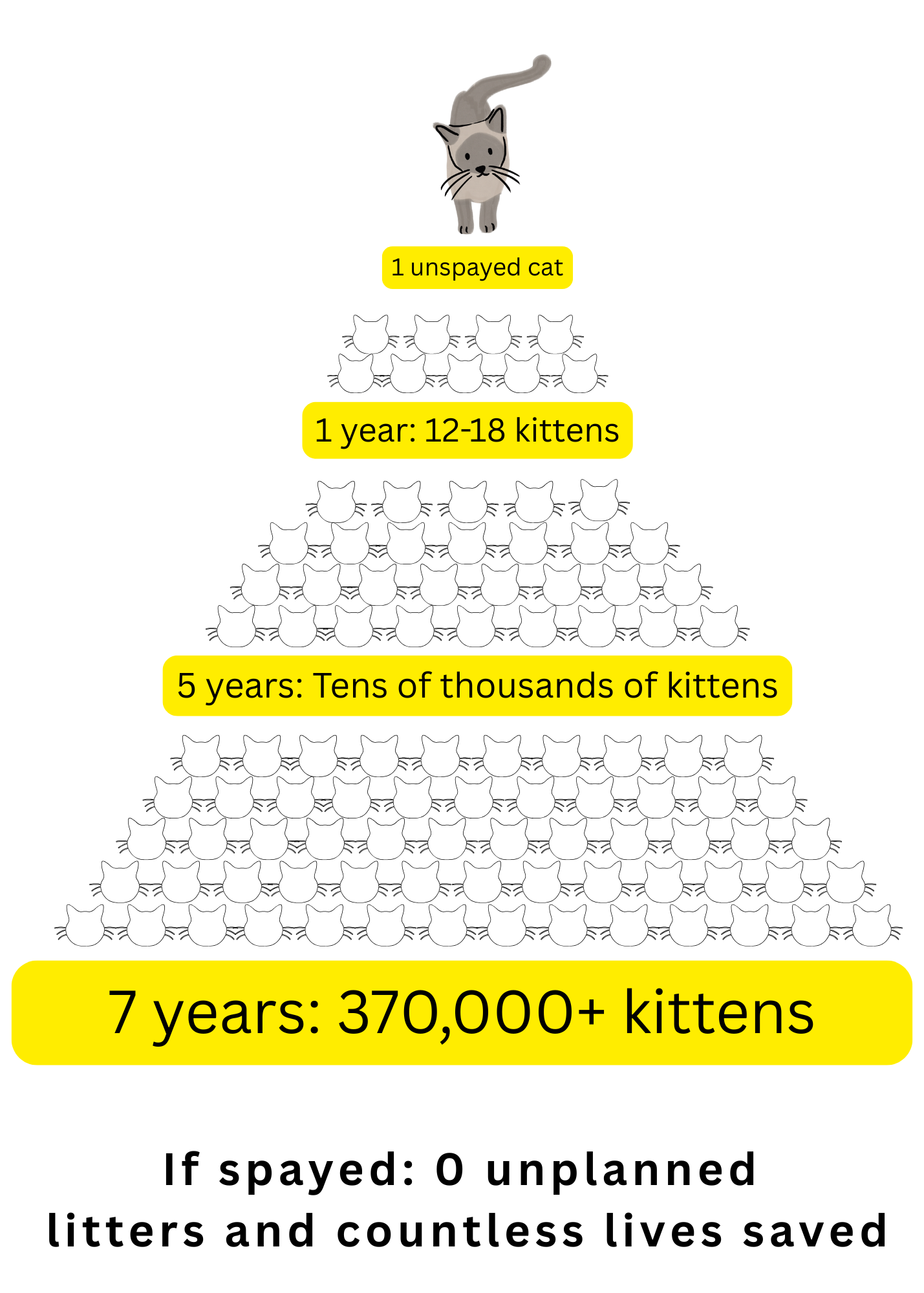
One spayed cat can prevent up to 370,000 offspring over a lifetime
One spayed dog can prevent up to 67,000 offspring over a lifetime
Reducing the number of unwanted litters is the solution for reducing pet homelessness and animals entering and being killed in shelters
Longer, healthier, and safer lives with spay and neuter

Safer pets
Pets that aren’t spayed or neutered are more likely to wander, increasing their risk of injury and death from fighting and traffic accidents as well as getting lost
Healthier, longer lives
Research shows that spayed or neutered dogs often live one to three years longer, and cats may gain three to five additional years of life
Prevents serious cancers in males and females
Spaying greatly reduces the risk of uterine and ovarian cancer mammary tumors. Neutering removes the risk of testicular cancer and significantly lowers the likelihood of prostate disease
Reduces future medical complications
Spay and neuter procedures decrease the chances of costly emergency care and long-term health problems later in life
Health and longevity benefits
Behavioral benefits
Better at home
Pets who are spayed or neutered are often calmer and more attentive, making training easier and strengthening their bond with your family
Supports safer communities
Research shows that un-neutered male dogs are significantly more likely to bite, and un-spayed females also carry a higher bite risk. Reducing these behaviors helps protect both families and neighborhoods
Less marking and spraying
Neutering greatly decreases urine marking and spraying behaviors
No heat cycles to manage
Spaying eliminates heat cycles in females